Security needs friction. Why independent cybersecurity is more important than ever.
Every organization wants to accelerate digital transformation. More cloud. More automation. More AI.
But while technology evolves at an unprecedented pace, one question is becoming increasingly difficult to answer: Who is actually managing the risks?
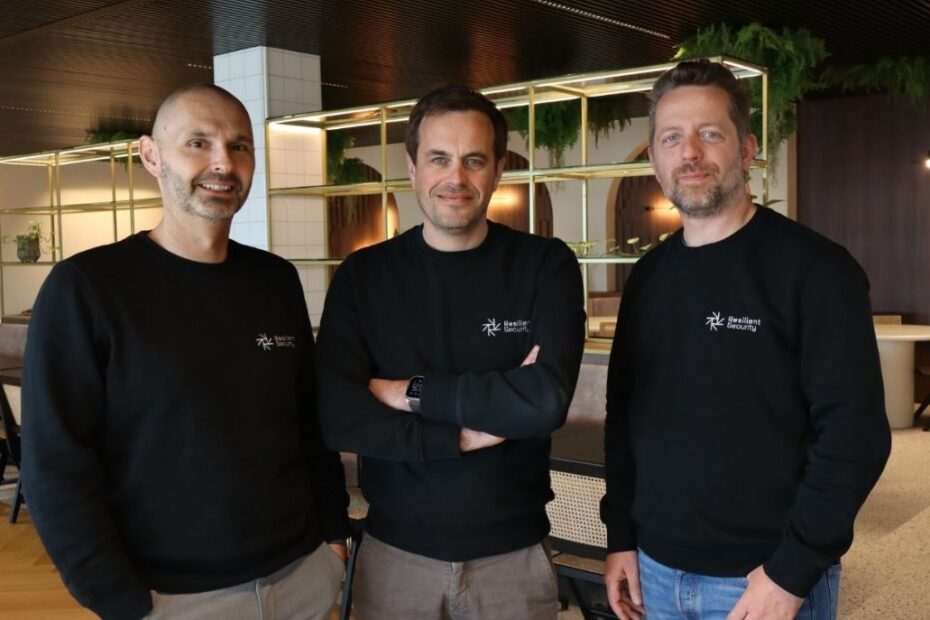
According to Peter Beyls, Robin Vermeirsch and Geert Gijsels of Resilient Security, this is one of the biggest challenges organizations face today. Not because they lack technology, but because cybersecurity is still too often treated as part of IT, when in reality it has become a strategic discipline.
From infrastructure to identity… and now to data
Cybersecurity has changed dramatically over the past decade.
Where the focus once revolved around networks, firewalls and infrastructure, it gradually shifted towards identity. Who has access? How are permissions managed? How do you prevent privileged accounts from being abused?
Today, another shift is taking place.
“For years, identity was at the center of cybersecurity,” explains Robin Vermeirsch. “But with the rise of AI, the focus is increasingly moving towards data. The challenge is no longer just who has access, but how you protect sensitive information in a world where AI can discover, combine and use data faster than ever before.”
This evolution makes cybersecurity not only more technical, but also far more strategic.
Why security shouldn’t be part of IT
Peter, Robin and Geert have worked together for many years. Long before founding Resilient Security, they built their careers in smaller IT environments where versatility was essential.
“We all have a similar background,” says Peter. “We started in environments where you did everything yourself, from managing firewalls to pulling network cables. That’s where you learn one important lesson: the customer always comes first.”
As they gained experience in larger organizations and more complex consulting projects, one thing became increasingly clear.
Security plays a fundamentally different role than IT.
While IT focuses on enabling digital transformation, efficiency and business continuity, security is responsible for identifying risks, challenging assumptions and protecting the organization over the long term.
“Security requires friction,” Robin explains. “You need someone who’s willing to ask the difficult questions. Security doesn’t always deliver immediate business value, but it protects organizations from risks they are ultimately responsible for.”
That is exactly why more and more organizations are choosing an independent cybersecurity partner alongside their IT partner.
Not to slow innovation down, but to make it more secure.
“The IT partner ensures the environment runs smoothly,” Peter adds. “Our role is to make sure that environment remains secure, governed and compliant. Together, that’s where the real value is created.”
AI is changing the playing field
Artificial Intelligence is accelerating this shift even further.
Organizations are rapidly deploying AI assistants, copilots and automated workflows. At the same time, the number of non-human identities continues to grow, creating entirely new challenges around governance, access management and data protection.
“Organizations no longer only need to understand who has access,” says Robin. “They also need to know what data AI can access, how that data is protected and who is accountable for it.”
According to Resilient Security, this will become one of the defining cybersecurity challenges of the coming years.
The real question is no longer whether organizations will adopt AI. It’s whether they can govern it.
Cybersecurity is never finished
This philosophy is also reflected in the way Resilient Security works with its customers.
“We don’t believe in projects that are simply completed and forgotten,” says Geert Gijsels. “Cybersecurity is a continuous journey. It’s about helping organizations gradually increase their security maturity over time.”
New regulations such as NIS2, the rapid evolution of AI and an increasingly sophisticated threat landscape mean that cybersecurity is constantly changing.
That’s why Resilient focuses on long-term partnerships rather than one-off implementations.
“We’re not just here to implement technology,” Peter concludes. “Our role is to help customers make the right decisions, today and tomorrow. We translate complexity into practical solutions and help organizations regain control, step by step.”
From technology to trust
Modern cybersecurity is no longer just about firewalls, identities or compliance.
It’s about trust. Trust that the right people, and the right non-human identities, have access. Trust that sensitive data remains protected. And trust that your organization is prepared for the next technological shift.
Because that’s what cyber resilience is ultimately about: not reacting when something goes wrong, but making the right decisions today to stay resilient tomorrow.
__
Cybersecurity is about more than technology. It’s about making the right decisions. Curious how an independent security partner can help your organization?
Other NEWS

From IT support to Service Delivery Manager: get to know Dwino

Microsoft is retiring SMS and voice MFA: here’s what you need to know